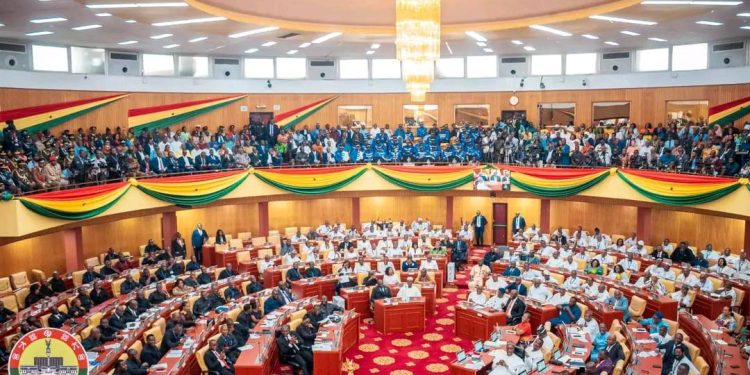
Parliament passes controversial anti-LGBTQ+ bill
Parliament has passed the Human Sexual Rights and Family Values Bill, 2025, widely referred to as the anti-LGBTQ+ bill, after making several amendments to the controversial legislation.

Yeboah Joseph
May 29, 2026 • 4 min read
AI Smart Brief
Get a quick 3-point summary of this article powered by Gemini.
The bill, which seeks to criminalise LGBTQ+ activities in Ghana, was approved on Friday, May 29, 2026, following intense debate in the House.
One of the key changes made to the legislation is the exemption of certain professionals and institutions from punishment under the law.
Under the amended version, lawyers who provide legal representation or legal advice to persons identified as LGBTQ+ will not face sanctions. Journalists and media organisations reporting on LGBTQ+ matters as part of their work have also been exempted.
Medical professionals, including doctors, psychologists, counsellors and surgeons who provide healthcare or counselling services to LGBTQ+ persons, will equally not be punished under the legislation.
The Minority Caucus strongly opposed the amendments during parliamentary proceedings. According to them, the changes suggest that the original version of the bill, which was earlier forwarded to former President Nana Addo Dankwa Akufo-Addo for assent, was flawed and not properly drafted.
Despite the opposition, Parliament went ahead to pass the amended bill.
How the bill started
The Human Sexual Rights and Family Values Bill has become one of the most controversial laws debated in Ghana in recent years.
The bill was first introduced in Parliament in 2021 as a private members’ bill led by Ningo-Prampram MP Sam George together with lawmakers from both the Majority and Minority sides.
Although Ghana already had laws criminalising same-sex relations under Section 104 of the Criminal Offences Act, supporters of the bill argued that existing laws did not adequately deal with LGBTQ+ advocacy, activism, promotion and funding.
They maintained that the legislation was necessary to protect Ghanaian family values, cultural identity and religious beliefs.
The bill quickly gained support from several religious bodies, traditional leaders and conservative groups across the country. Many supporters argued that Ghana should resist what they described as increasing international pressure to recognise LGBTQ+ rights.
The original version of the bill proposed strict penalties for same-sex relations, LGBTQ+ advocacy and promotion, public displays of same-sex affection, as well as the formation or funding of LGBTQ+ organisations.
It also sought to punish individuals, institutions or media platforms accused of promoting LGBTQ+ activities.
National and international reactions
From the moment the bill was introduced, it sparked widespread debate both in Ghana and internationally.
Religious organisations such as the Ghana Catholic Bishops’ Conference, the Christian Council, Pentecostal and Charismatic churches, as well as some Islamic groups openly supported the legislation.
On the other hand, human rights organisations, legal experts and civil society groups criticised the bill, arguing that it threatened constitutional freedoms and violated fundamental human rights.
Several foreign governments, international NGOs and global rights organisations also expressed concern, warning that the legislation could damage Ghana’s democratic image and international reputation.
At different stages of the debate, concerns were raised about the possible economic impact of the bill. Some analysts warned that its passage could affect Ghana’s relationship with development partners, foreign investors and international financial institutions.
Reports in 2023 and 2024 suggested that some donor partners and financial institutions were closely monitoring developments surrounding the legislation.
Legal challenges and delays
The bill went through years of committee reviews, stakeholder consultations and parliamentary debates.
Parliament’s Constitutional, Legal and Parliamentary Affairs Committee received submissions from religious bodies, academics, lawyers, civil society organisations and members of the public.
Discussions largely focused on constitutional rights, freedom of expression, religious beliefs, family values and Ghana’s international obligations.
In February 2024, Parliament first passed the bill and forwarded it to former President Nana Addo Dankwa Akufo-Addo for assent.
However, the former President did not immediately sign it into law.
Soon after, several legal challenges were filed at the Supreme Court questioning both the constitutionality of the bill and the process used in passing it.
Some petitioners argued that portions of the bill violated constitutional rights such as freedom of speech, association and equality before the law.
Others also questioned whether Parliament had followed the correct constitutional process, especially concerning financial implications tied to private members’ bills.
The legal cases delayed presidential assent and prevented the bill from becoming law at the time.
Parliament revisits the bill
In 2025, Parliament reconsidered the legislation and introduced new amendments before passing it again on Friday, May 29, 2026.
The revised version introduced exemptions for lawyers, journalists, media organisations and healthcare professionals who may interact with LGBTQ+ persons in the course of their professional duties.
Supporters of the amendments argued that the changes were necessary to protect constitutional rights and professional responsibilities.
However, some Minority MPs maintained that the amendments exposed weaknesses in the earlier version of the bill.
With Parliament now passing the amended Human Sexual Rights and Family Values Bill, attention is expected to shift to presidential assent and any fresh legal challenges that could follow.
The legislation remains one of the most divisive political and social issues in Ghana, continuing to generate strong reactions from politicians, religious groups, rights advocates and the international community.
Comments (0)
No comments yet. Be the first to share your thoughts!